• Skip to primary navigation
  • Skip to main content
  • Skip to primary sidebar
  • Facebook
  • RSS
  • Twitter
  • YouTube

Courageously Creative

Be more creative in your own way

  • Home
  • FAQ
  • About
  • David’s Artwork
  • Blog
    • Creating
    • Inspirations
    • Innovation
    • Competitiveness
    • Food
    • Risk taking
    • Painting
    • Future
  • Book

Creating

Creating

Back To Basics

January 23, 2015 By David Goldstein

will never boil

will never boil

Years ago when I asked my grandmother for her chicken soup recipe, she thought back and told me her first step was to remove all of the feathers. So each winter the first thing I do when making a batch of soup is to read her instructions and skip the first step.

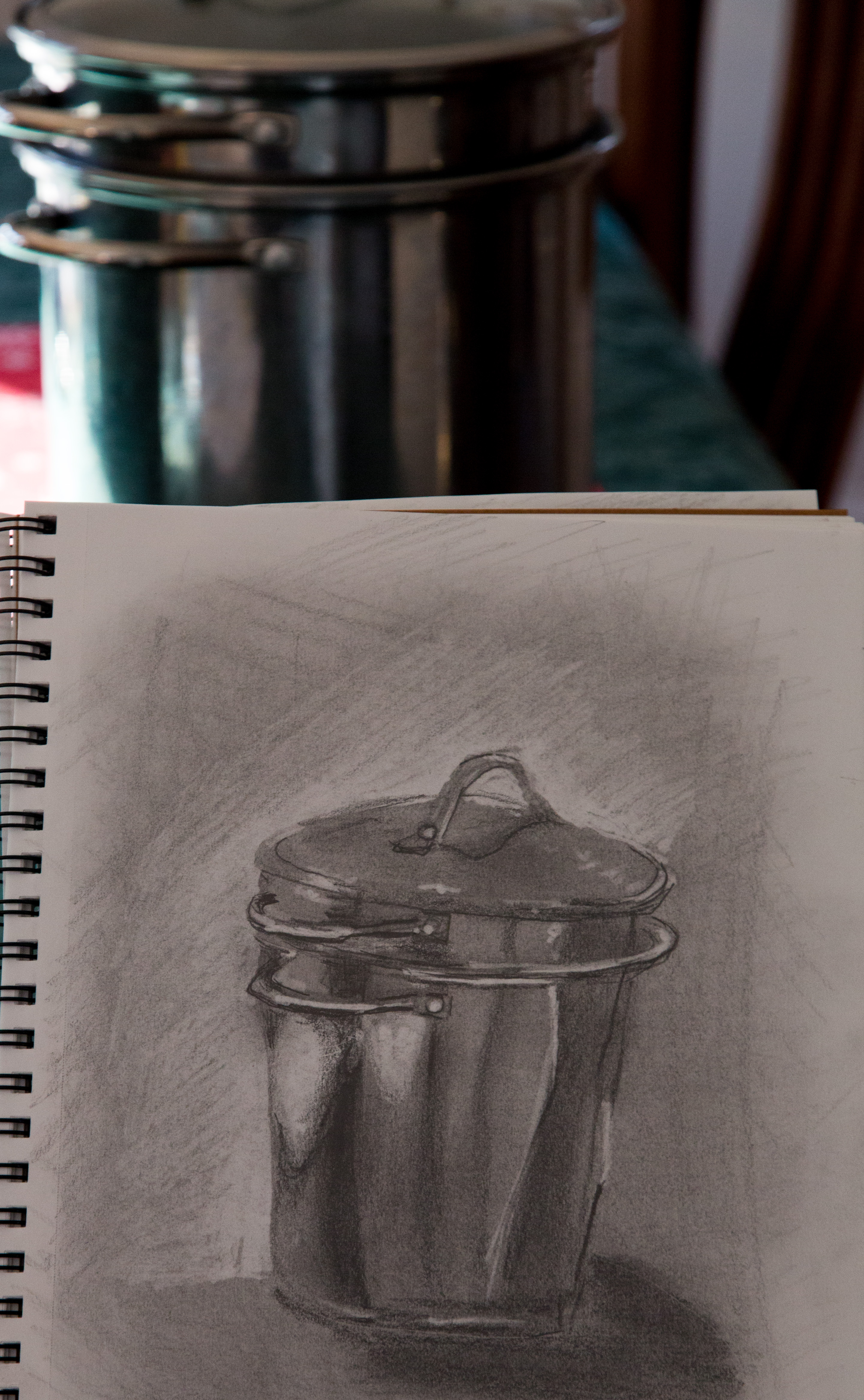
Through the years, starting with the basic recipe, I’ve experimented and made some improvements and mistakes. Dill didn’t really work but using cheesecloth was an improvement. While it’s easy to throw vegetables and a carcass into a pot, it’s more laborious to get them out. Softened carrots, parsnip, and celery break apart and worse – bone fragments need removing from the broth. Difficulty and finger burns have given me reasons to find better ways for making a homemade soup that just can’t be found anywhere else.

Although I thought of it myself, post-invention Googling shows I’m not the first to try my latest innovation. It’s to use a pasta insert to lift the solids from the boiling broth. Also, instead of boiling, I added vegetables to an upper steamer compartment and they stayed firmer, while their drippings fell right in making this the easiest and best soup to date.

While I enjoy experimenting, this winter, I’m looking for opportunities for improvement by getting back to basics – and I’m curious if you would like to join me. All creative expressions have two separate parts, an idea and a technique.

We all have ideas, and we all can learn or improve upon our techniques.

When we master a technique, whether its learning to use the f/stop on our camera or knowing how to format a business plan, we are better equipped to express our ideas.

Unlike plucking the chicken, sometimes we can’t skip the basics.
I’m taking a step back to work on improving technique by improving my writing, drawing, practicing pen and ink exercises, and looking at best practices in the kitchen. It isn’t about precision or perfection; instead it’s about improving our techniques. Whatever medium we practice, learning the grammar helps us express our ideas and helps others accept except our ideas.

One step back to basics may yield three or four steps ahead. As we need channels to express our ideas out from our minds, we can never go wrong by improving our techniques. What are you going to practice?

What’s in Your Lost Parts Drawer?

November 11, 2014 By David Goldstein

missingpartsdraw

Whatever the weather, every morning while driving past the corner bank, I see an armed guard in the parking lot. The security he provides stands as a quaint relic from the days before cybercrime. Then one day, the guard was gone. Was he sick, or on vacation, or repurposed to the pasture of a cubical farm? It was only three days without a sighting when while approaching the bank through an unusually thick patch of traffic, I saw vehicles with flashing lights and a small army of police investigating a crime where the absent guard once stood. Some missing elements, even if not obviously useful, over time can show their purpose.

When you notice something is missing do you see opportunity, not in the robbing sort of way, but for creativity? By adding the right people, the right processes, or the right parts we fill vacuums to create value. An empty storefront begs the question: What’s needed here? Extend your offerings by asking, what do your customers find themselves doing immediately after they buy your product? Or, improve your dinner by adding the missing spice to your jambalaya? Tiny incremental improvements using the smallest hint of liquid smoke can have gigantic impacts.

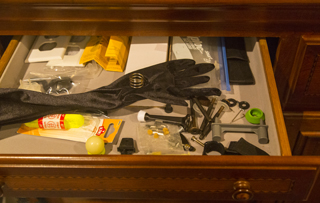
These small droplets used in the right way can matter. Our lives are full of stray jigsaw pieces and unidentified shards of plastic that are somehow essential, although their purposes won’t reveal themselves until the next time you try to start your lawn mower or turn on your ceiling fan. Without the dream of a 3d printer, these parts would be nearly impossible to replace and make cherished objects useless.

Henry Ford said “I always had a pocket full of trinkets—nuts, washers, and odds and ends of machinery.” And continued, “There is an immense amount to be learned simply by tinkering with things.”

Tinkering or not, when strays are found, theses nuts and bolts, sketches, lyrics, photos, phrases on post-it notes, color swatches, torn magazine articles, domain names, business cards, and rhymes can be herded and horded into a lost parts drawer. This is a special place where many bits of metal enter but few ever leave – but the ones that do leave shinning like gold.

Creativity doesn’t have to be useful today. Some of our remnants gather until they reach saturation and then rain down in a lightening storm of aha moments. Some ideas are before there time, others can be used as a stepping-stone for you or someone else to leap for greater places. What do you do with your incomplete starts? Do you keep a lost parts drawer to draw from?

2 Minutes or 2 years? Creativity on Demand!

June 12, 2014 By David Goldstein

Creative Block

Creative Block

During the next two minutes, how many alternative uses can you think of for an ordinary brick? Aiming to access our creativity, this harmful question has been asked for years. Don’t think of enough paperweights and bookends and you’re branded as uncreative and discouraged from trying again. While this inquisition certainly measures something, it misses the point that creativity is elusive, can take a context with time for reflection, imagination – and creativity doesn’t just perform on demand.

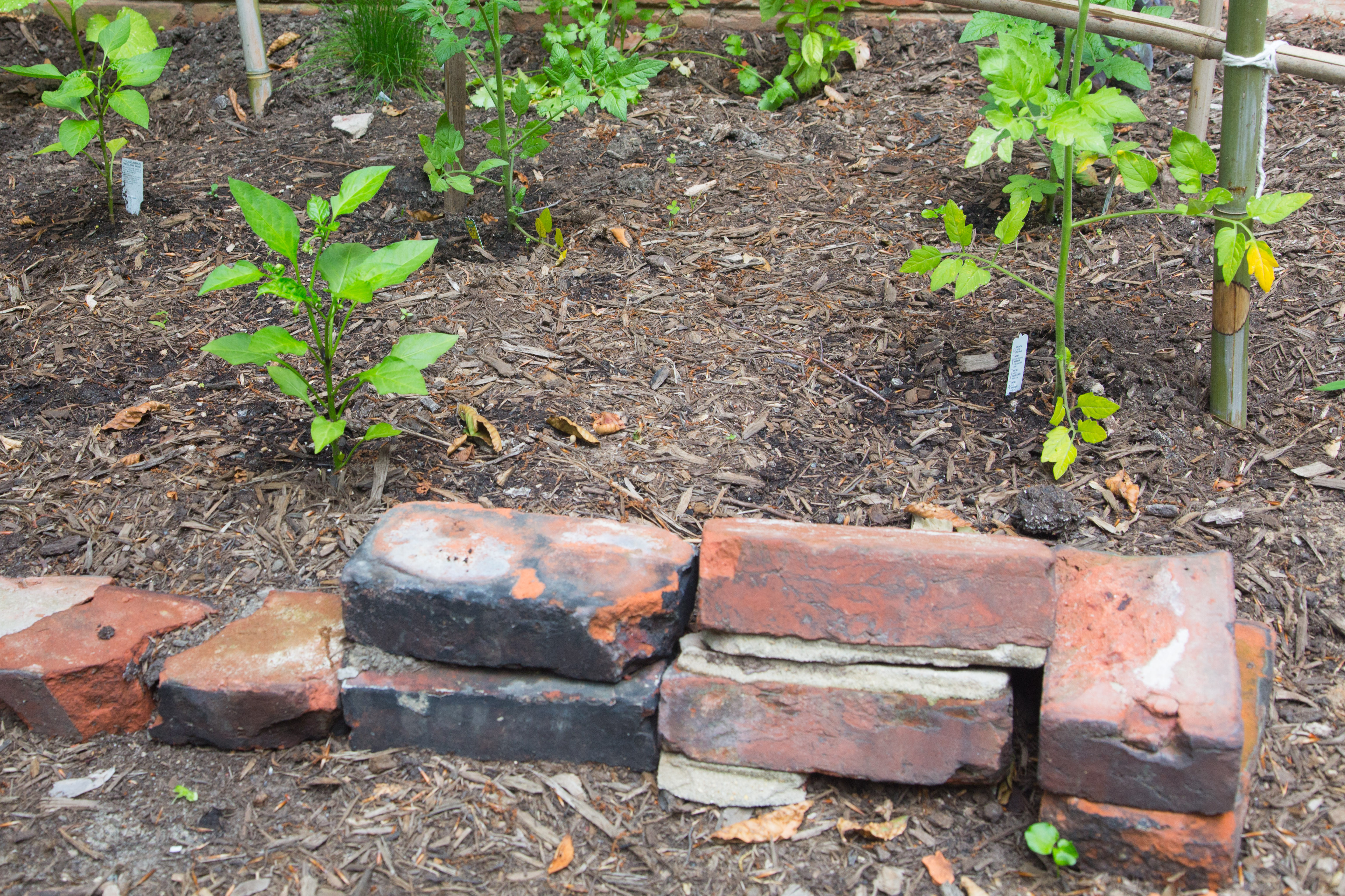
I had my own less than ordinary brick problem when Hurricane Sandy decided to transplant a hundred year oak onto my roof – toppling my chimney in a way that would have earned a Facebook “like” from the Big-Bad-Wolf. After rebuilding and cleaning up Sandy’s mess, I was left with a whole pile of spare bricks. What to do with them all? Just think of the possibilities!

Then, for nearly two years, while I was busy with writing, paintings, and photography, these unused bricks served as a towering monument to my apparent lack of creativity on demand.

This spring without the tree, I noticed sunlight on my previously shaded property.

new life for old bricks

new life for old bricks

Sun light was the missing ingredient for a vegetable garden but what could I use to raise the beds? Finally reusing the bricks completed the circle of life. The next time you are asked for alternative uses for a brick… Let them know that creativity often takes time and that you’ll get back with them in about two years.

STEAM In Action: It’s More Than A Show

March 6, 2014 By David Goldstein

Electricians designing the stage lighting

Electricians designing the stage lighting

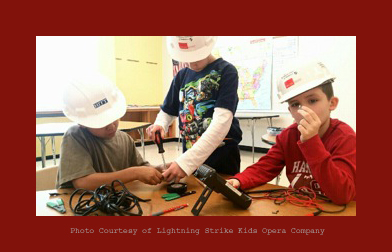
I’d like to share with you something that few people get to see. I had the chance to visit a… don’t stop reading when I say the words… opera company preparing for a show. It wasn’t particularly striking that the members are writing their own script, composing their own music, building their own set, and promoting their tickets – what’s incredible is that the company is made up of 8 year old third graders in public elementary school.

As I’ve discovered through my work, third grade may be the very time that matters most in determining our creative potential. So what seems to happen around the third grade to discourage us? Many people interviewed for my book had variations of the same story. They once enjoyed singing or dancing, building or drawing — but today, they don’t see themselves as creative. Ask why they stopped and they often confess to something that happened around the third grade.

They were doing something original and exciting — like singing a rhyme they wrote or using a purple crayon for coloring a tree — and were criticized and laughed at for the very achievement they were most proud.

It doesn’t take much for children to give up on being original. In fact the other day a retired teacher who had taught all ages said to me that she enjoyed teaching 2nd graders best because: “You can ask the students to become flowers and they become flowers — they still use their imagination and act creatively.”

Here at this critical junction in our development, in her classroom Mary Ruth McGinn, along with her adult volunteers encourages their third grade Lightning Strike Kids Opera Company to be original. Opera is both the process and the product where creativity is encouraged and academic lessons from the classroom are tried and applied in real ways.

This isn’t art for art’s sake, here every day creativity is practiced, promoted, on a schedule, and has a deliverable. On my visit, with only 10 remaining group meetings before opening day, everything had a purpose. The writers were writing dialog to be read by the performers. The performers watched a video of their scenes and self-critiqued to make adjustments. Composers were deciding where to insert sounds and songs into the script to evoke moods. The public relations team produced a press release to be sent to local school principles, legislators, and media to spread the word. Designers were creating costumes with styles and colors to suit the characters. Set builders and electricians were using tools and technology for building an atmosphere on stage with lights to enhance the storyline. Everyone was using math to count, to time, to measure, and to design. And since everyone is naturally creative in different ways, the production of an opera provides many ways to contribute.

Among some educators, there’s a shift toward STEM which stands for Science, Technology, Engineering and Mathematics which are seen as core subjects essential for student’s success and competitiveness. And within STEM there is a growing movement to integrate Arts. And with the “A” from Arts, STEM becomes STEAM and becomes more powerful. Arts amplify sciences by showing there is often more than one right answer and the arts provide a way to design, experiment, and apply creativity.

Many people talk about instilling creativity into learning and Ms. McGinn’s Opera Kids put on more than a show. The students are using their education and ideas by putting them into practice, learning about leadership, and collaborating with people with diverging ideas.

Studies have shown that most people believe creativity is necessary for economic growth, to remain competitive, and to improve our standard of living. 8 years old seems to be the very time that children need the experiences and encouragement to retain their creativity, whatever the product happens to be in this case a live performance – integration of the arts are essential. As third graders can learn to collaborate to produce an opera they will have the STEAM to grow into the next generation of creators to benefit us all.

When Every Problem Looks like a Camel

February 10, 2014 By David Goldstein

When every problem looks like a hammer.

When every problem looks like a hammer.

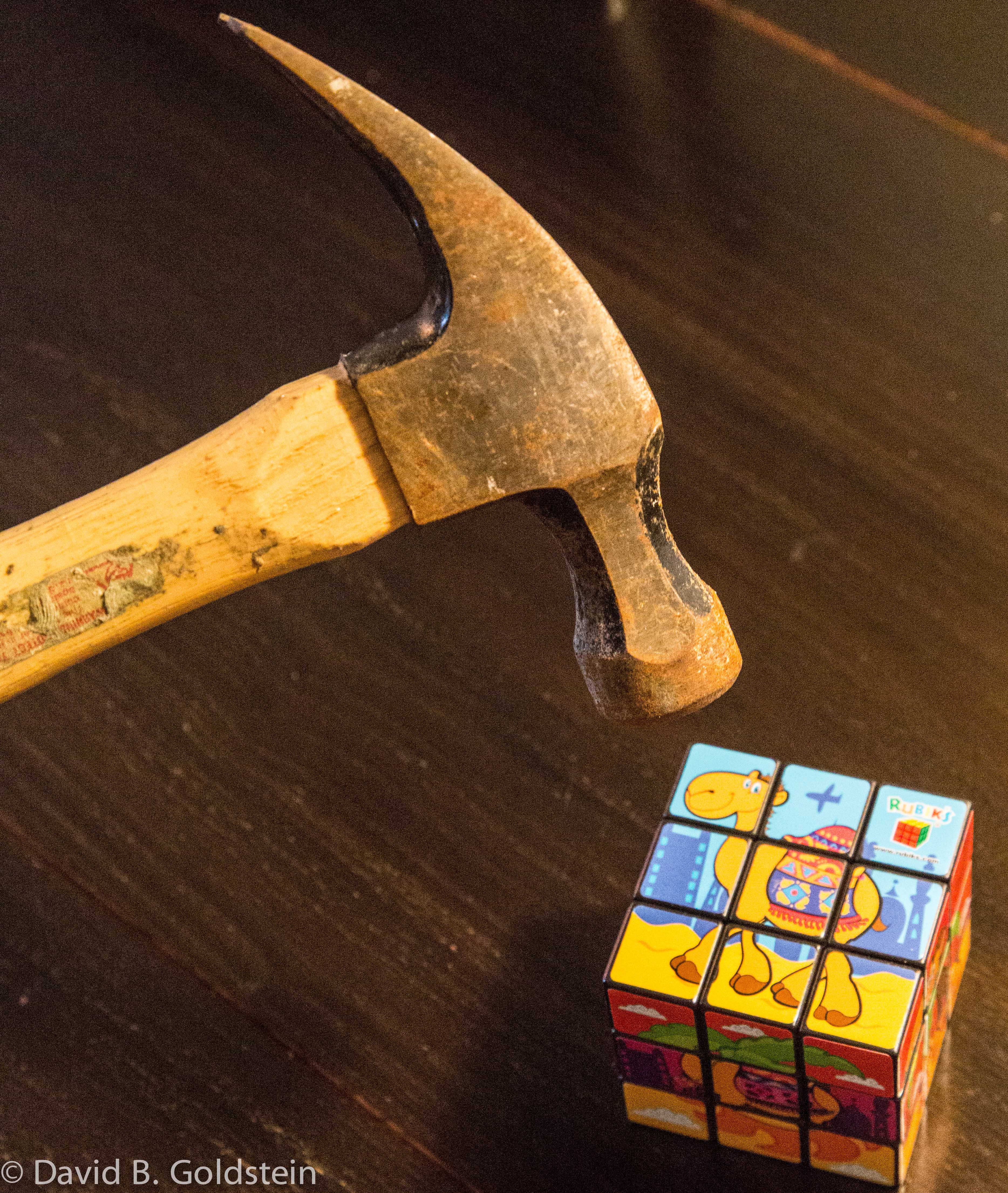
Has this happened to you? Half asleep, starting breakfast and opening the kitchen cabinet, the door fell off its hinges and narrowly missed my bare toes. Bits of metal flew across the floor and my first thought was who is going to be able to fix this? And then sweeping up the pieces, I wondered, where am I going to find replacement parts? There are plenty of problems I know how to solve but when it comes to attempting home repair – either I cause more damaged or it results in running cold water and finding band-aids – and sometimes both happen.

Do you have a growing list of things that need to be fixed? I try to get help from plumbers, repair people, electricians, neighbors, fedex drivers, anyone who seems good with tools. Some items get quickly crossed off my list but others are added to the permanent record. When asking for help, I get to hear some clever stories with plenty of arm waving and head shaking of why these problems are simply ridicules, one of a kind, nonstandard, impractical, not cost effective, and would require an out of date, oversized, metric, no longer manufactured, rare alloy that has been banned in 43 states. Did I ask a camel to cross the desert with no food or water? “Impossible!” And even if it could be done, it would be dangerous to install and harmful to have in a place where people occasionally gather to listen to jazz. Some repair persons, with their years of experience have honed their technical ability and use their imagination to craft the perfect anecdote of why they don’t have an antidote.

Listen to the MUSTN’TS, child,
Listen to the DON’TS
Listen to the SHOULDN’TS
The IMPOSSIBLES, the WON’TS
Listen to the NEVER HAVES
Then listen close to me—
Anything can happen, child,
ANYTHING can be.

― Shel Silverstein in Where The Sidewalk Ends

Then yesterday, a handyman breezed in and problem-after-problem was met with a low-key “sure I can do that.” Some troubles dating from the 1990s didn’t even yield more than: “Yeah I could just make a part… next, what else you got… just glue and some clamps — anything else?” And suddenly with the right attitude anything is possible.

Back in a world where every home maintenance problem can have a creative solution, even thought I don’t have a clean room and zero gravity to attempt the repair, now fully awake and inspired to try, I made a closer inspection of the hinge crumbs in my dust tray. Nothing appeared damaged and with a simple screwdriver, I reconstructed the cabinet door mechanism without drawing any blood. Today, anything is possible – by thinking positively and trying. What seemingly impossible problem are you going to solve?

Do You Know Where You’re Going To?

December 20, 2013 By David Goldstein

The Last Mile

The Last Mile

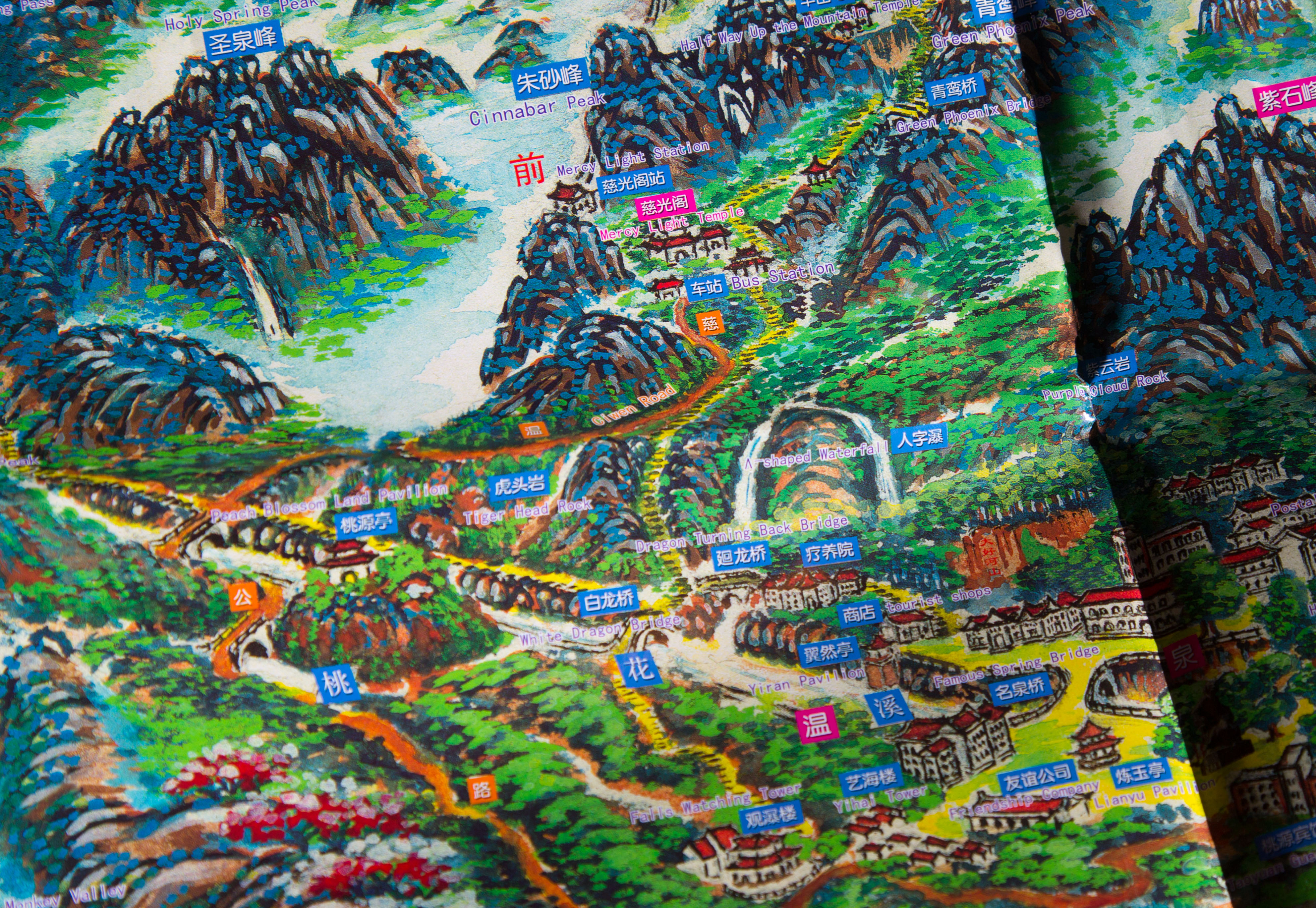
Slightly ruffled the female sounding voice said: “YOU FINAL DESTINATION IS NOT ON A DIGITIZED MAP” – as if asked, how do you get to Santa’s house? Then, with a second thought, the GPS reluctantly gave a route to follow. When reaching the end of the paved roads, she naively said: “YOU HAVE ARRIVED!” Wishful thinking and self proclaimed success – but not worth celebrating and not exactly true — since I’m standing about a mile from the destination.

While we once unfolded our maps and plotted our courses, now our navigation systems handle all the unfolding and plotting and even re-routes us when the odd reindeer is blocking our path. And this is fine for ordinary destinations, but for those less traveled mountains, remote beaches, or arctic expeditions — we don’t exactly know how we will get there or what we will find — and that’s part of the point of going.

Creativity treks far into the less traveled, the out-of-the ordinary, and uncharted. Creating is often messy, and the muddy footprints we leave show that our path isn’t always a straight one. If we do have a map and neatly follow the path to the end, it may leave us blind to some opportunities along the way – however, on the other hand, with no general direction, we may never leave the grid — And we can’t rely on others to unfold our map and plot our course. Whether we start by planning or not, we often don’t know our final destination until we get there.

Ralph Waldo Emerson said: “Do not go where the path may lead, go instead where there is no path and leave a trail.” We can make resolutions and plan for the year ahead but our final destination is not on a digitized map. I’m thankful for all your support and wishing you a creative and wonderful New Year!

  • « Go to Previous Page
  • Page 1
  • Page 2
  • Page 3
  • Page 4
  • Page 5
  • Interim pages omitted …
  • Page 10
  • Go to Next Page »

Primary Sidebar

Creative You ORDER NOW:
amazon
Barnes and Noble

Sign Up For Our Newsletter

Subscribe to the Blog by Email:

Archives

RSS Creativity, Innovation News

  • Art LANDMARK brings innovative partnerships and creative discourse to the center of Central - prestigeonline.com
  • World Creativity and Innovation Day: In the Age of AI, What Makes Art Meaningful? | Newswise - Newswise
  • World Creativity and Innovation Day: In the Age of AI, What Makes Art Meaningful? - Dailyhunt
  • San Francisco Art Fair 2026 Explodes with Global Creativity and Bold Innovation at Fort Mason Center, USA - Travel And Tour World

Copyright © 2026 · Privacy