• Skip to primary navigation
  • Skip to main content
  • Skip to primary sidebar
  • Facebook
  • RSS
  • Twitter
  • YouTube

Courageously Creative

Be more creative in your own way

  • Home
  • FAQ
  • About
  • David’s Artwork
  • Blog
    • Creating
    • Inspirations
    • Innovation
    • Competitiveness
    • Food
    • Risk taking
    • Painting
    • Future
  • Book

Creating

Creating

Is the City Mouse a Creative Mouse?

May 9, 2012 By David Goldstein

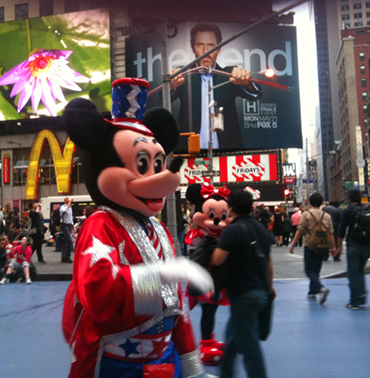
city mouse

City mouse

Have you ever gotten a great new idea through randomly running into someone and having an unexpected conversation? Do you think crowded cities where people bump into each other breed creativity?

In his recent book Imagine, Jonah Lehrer points to studies showing that patents more often build on the ideas from inventors that live nearby. He also discusses the idea that in cities people walk through multi-use and crowded places like Hudson Street in Greenwich Village and literally bump into each other and share ideas.

This seems to be only part of the story. I’ve unscientifically walked down Hudson Street many times and have been bumped into plenty! Although words are sometimes exchanged, for me it hasn’t been the start of any fruitful exchange of ideas. For some reason while walking around the streets in Asia, it seems I was bumped into even more frequently. My only creative result was defensive. To avoid bumps, I started to wear bright “caution” orange shirts to become more visible and it worked – a little. With all the narrow spaces and crowded cities in Asia and all those collisions, I wonder why they haven’t developed a reputation for creativity? (With the obvious exception of Japan)

test It seems when it’s too crowded, people don’t talk with their neighbors, with people in elevators or subway cars and this gives a sense of privacy. On the other hand, with too much space, it becomes out-of-the-way to walk down a long driveway to causally say hello to your neighbors. Have you noticed there is seems to be some magically in between distance that sparks conversation?

Perhaps, it’s not the physical space as much as the people who are drawn to the cities. From my experience, people who are interested in using their creativity are open to change and new experiences and they move to cities in search of opportunities for whatever their specialty. Masses of people in cities support masses of creativity that fill every niche.

If you’re a city mouse, have you noticed the real estate brokers are musicians and actors, and the babysitters are culinary chefs and choreographers? Everyone you bump into is a conductor, actor, artist, or has at least one degree of separation away from the arts. In cities, the only people who don’t call themselves artists are the people we find in our art and music classes since most of them are busy being doctors and accountants.

Of course creative ideas are randomly shared in cities, but not as efficiently and relevantly as they are shared electronically. Maybe it’s like when you find an interesting article while flipping through a magazine that you didn’t know you were looking for. Do you think it’s the layout of the city or the people who are drawn to cities that contribute to creativity? Or do you think the best ideas come from the country mouse?
Save the Economy with More Exercise, More Showers, Longer Commutes

February 6, 2012 By David Goldstein

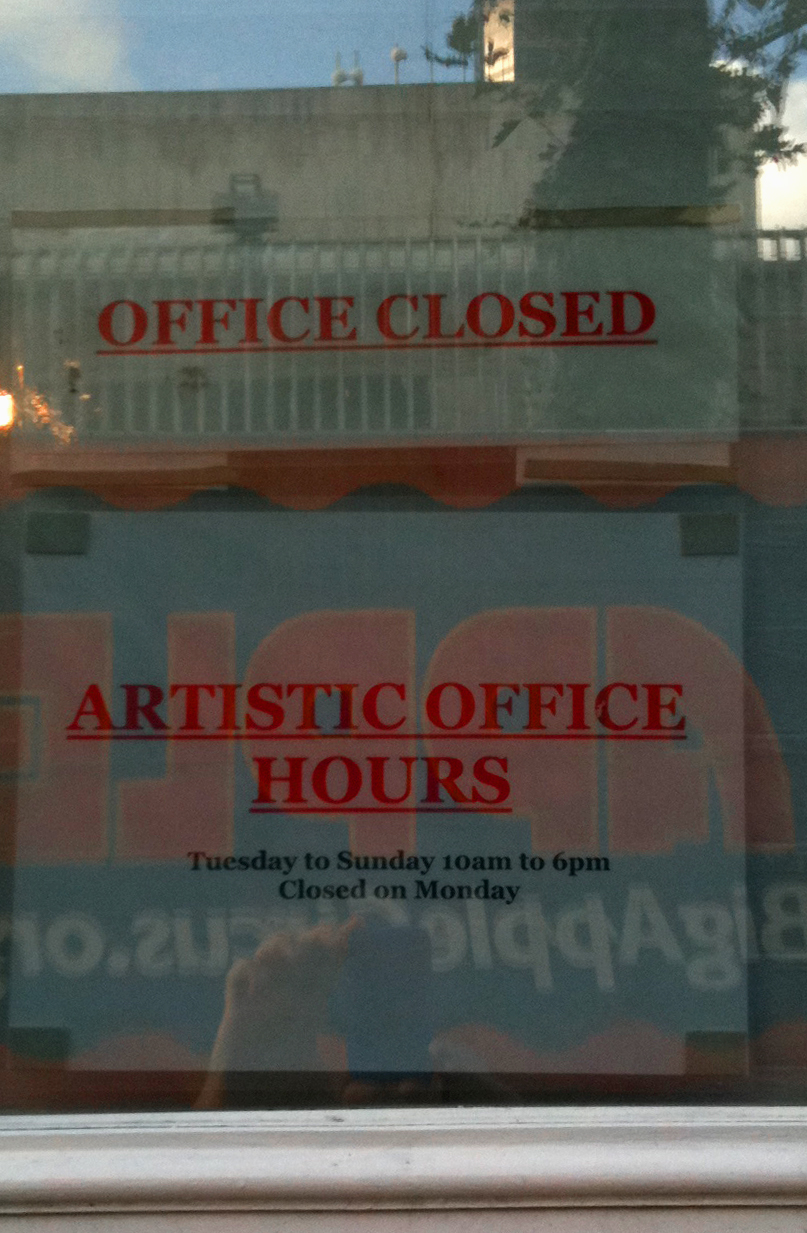
Banking Hours?

Do you have certain hours of the day when you are most creative? People always say they get ideas while showering, exercising, or commuting. If these are indicators for creativity, I wonder which countries have the great environment for generating ideas?

I don’t know who takes the longest showers, and does the most exercising but there are numbers available for longest commute. According to Worldmapper The world average commute is an hours and twenty minutes each day and the nation with the greatest commute time is Thailand with over 2 hours. In fact, Southeast Asia, on averaged commutes almost twice as long as workers in North America. Bad for fuel consumption, pollution, and productivity but is it good for generating ideas?

Do you think urban or suburban commuting makes a difference and which is more conducent for generating new ideas: Mindless driving? Or being a passenger in a taxi and letting your mind wander?
Here is an innovation: for Fashion Week, A fleet of 50 taxis in New York City are providing free rides to test a new service. The already equipped in-taxi TV screens will be used for this experiment to allow passengers to view advertisements and make direct purchases of items, like lipstick, by scanning a code with their mobile phones.

Apparently, a supermarket has tested this idea in Seoul allowing passengers to buy groceries (for delivery) directly from billboards in their wifi enabled subways. This could certainly revolutionized and expand the concept of what is a store, if anything printed with a barcode becomes an opportunity to buy and sell. But will it give us more to do during our commute and take away our precision time to daydream?

Found in Translation: The Right to Be Yourself

December 10, 2011 By David Goldstein


Hearing Spanish in my left ear and the English translation in my right ear, the cross talk was confusing. Have you ever had a mismatch between what you’re hearing and what you’re hearing? It was my first experience using U.N. style earphones with a live translator and I was sitting so close to the people speaking that for the first few minutes there was a disconnect between my ears. Then, suddenly my brain synchronized and everything made sense.

Isn’t art also about getting ideas to synchronize? Through art we can express ideas that often cannot be said with words. When we couple our creative efforts with ideas we can clarify and amply essential messages. Whether visual arts, music or pottery, when our creations are synced with messages, then our ideas can carry beyond the borders of a canvas or the walls of a concert hall, and they can carry more water than any pot. Of course art can stand alone, but when coupled with essential ideas that must be spread, then art becomes a media that adds clarity and increase a messages impact.

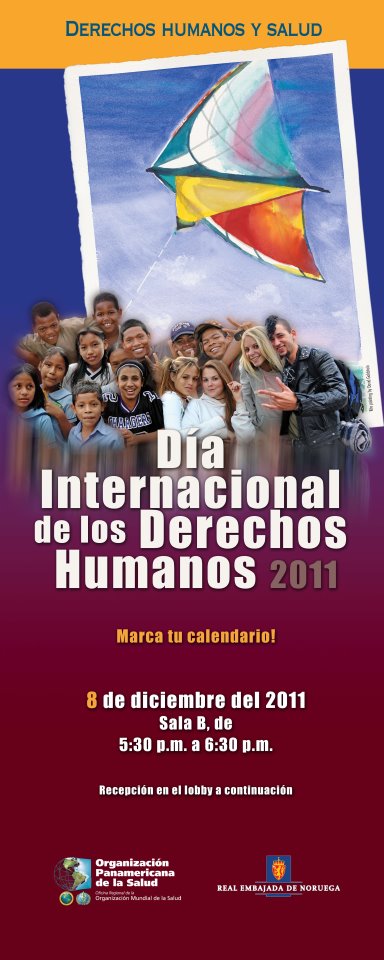
I had the honor of producing the “Freedom Kite” painting that is being used by the Pan American Health Organization
to promote and protect health and human rights for Human Rights Day today and beyond.

In the experience I had the opportunity to learn about the essential work being done so passionately by the people at PAHO and by other world leaders who actively use their creativity to protect and promote human rights in their daily job, making the world a better place for all of us. The challenge for all of us is to help people like these by using our strength and our abilities.

In my speech at PAHO, I said: “when we do something we love we often succeed, but we also need the freedom to be ourselves and the freedom to be ourselves is a basic human right.” Creating is all about being yourself too. We are influenced by others but our greatness does not come from copying or fitting in but by being ourselves. What do you think?

Encouraged by the Bottom 10 percent

November 16, 2011 By David Goldstein

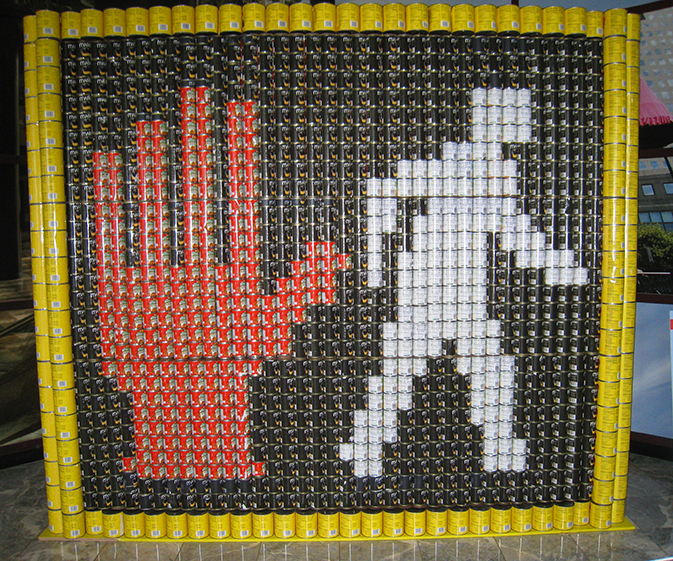
"Can" you make it across (click to enlarge)

If you’ve been to Hong Kong, have you noticed the flashing man on the WALK signs look uncharacteristically overweight? Occasionally in NYC, you can see WALK and DON’T WALK lighted simultaneously, but have you ever seen a WALK sign made entirely out of cans of food.

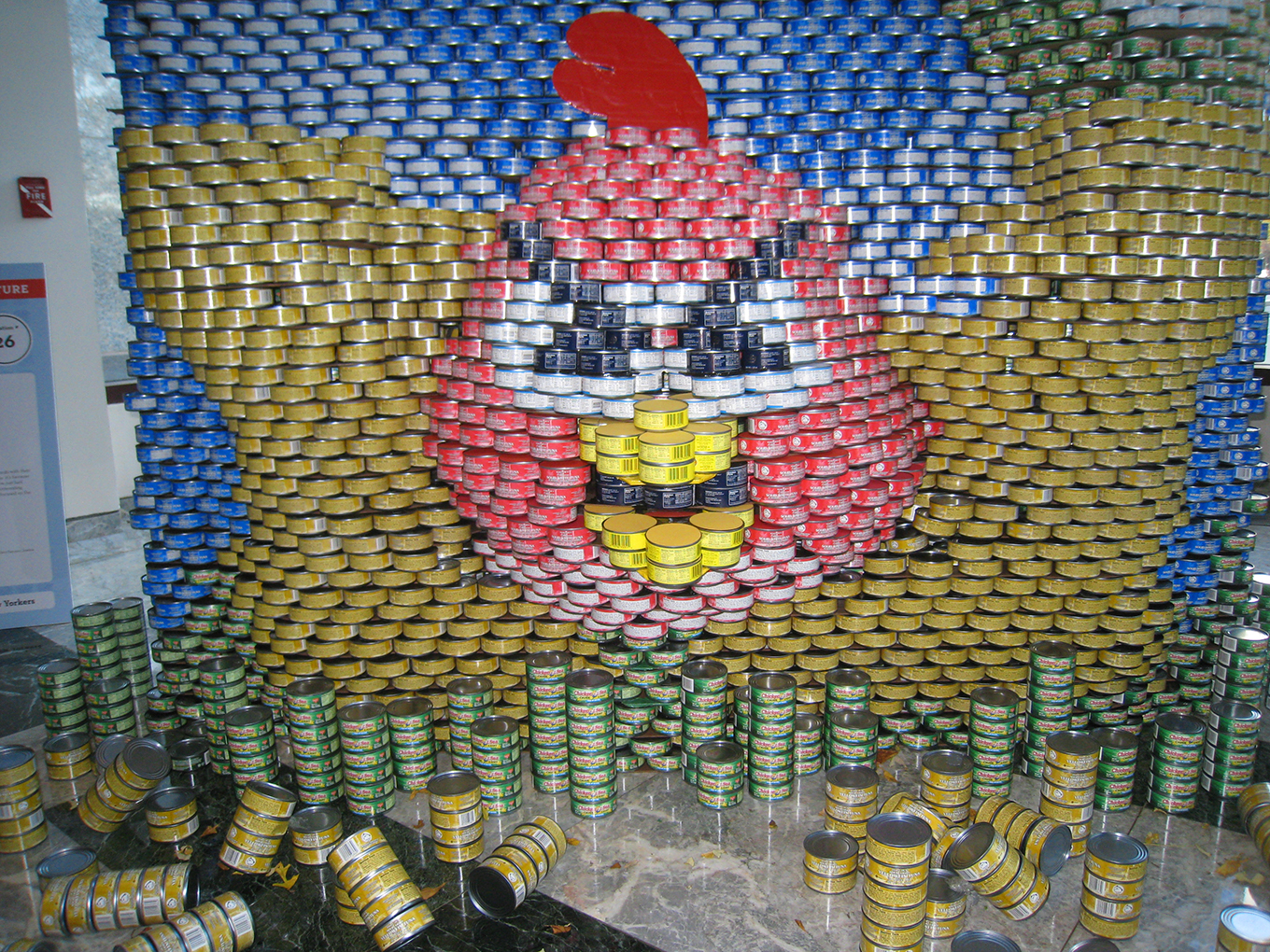
Massive structures are built using cans of food as part of a design competition with the winners displayed at the World Financial Center in Manhattan. The event is sponsored by Canstruction which uses cans of food as a catalyst for change. When the structures are dismantled after November 21st, the food is donated to City Harvest,who uses the cans to feed hungry people.

While most structures are incredible, pointing to one that seemed lesser, I friend surprised me by saying , “if I could do that, It’s not very good.” Conversely and thinking back many years when I first started painting,

Why so angry? (click to enlarge)

I would go to group art exhibitions and feel challenged by the best watercolors yet encouraged by the bottom 10 percent. I would say “I could do that!”

The same sentence, “I could do that” can evoke opposite responses between people. Do you compare your abilities with professional athletes while watching a football game and say, if I could catch that ball, the player must not be very good? Why is our creativity so difficult to accept? Perhaps we could recast our self image on creativity, especially if we see proof that we can do something other creative people are doing.

Which one is your favorite? See more photos of the constructions [Read more…] about Encouraged by the Bottom 10 percent

Put your subconscious to work so you don’t have to

November 3, 2011 By David Goldstein

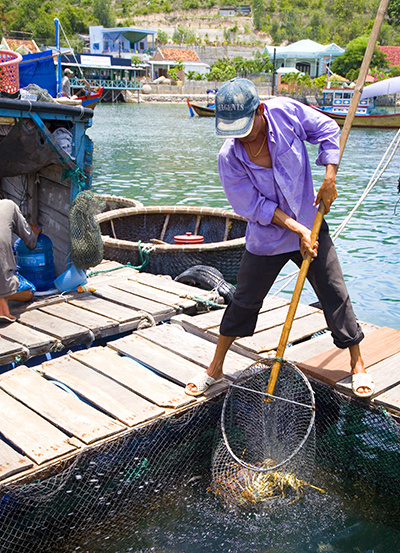
Fishing for ideas?

Fishing for ideas? (Nha Trang, Vietnam

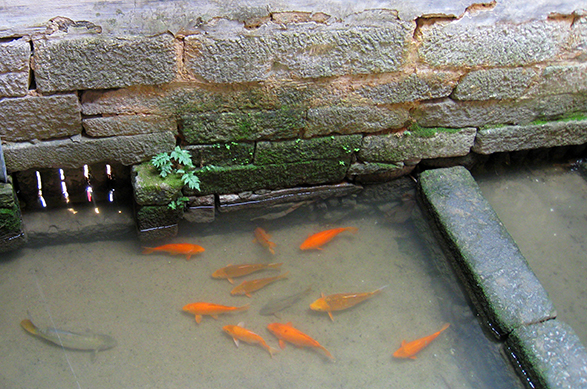
In the ancient watertown of Hongcun, the Chinese thought of everything – including private indoor fishing holes in the homes along the canal. Just open the gate, add some bait and wait. After the fish swam in for brunch the ancient non-mariners closed the exit. Solving problems with creative solutions is like setting fish traps. Set the bait by defining the problem. Then walk away, and spend some time doing something else like driving, watching a movie, taking a nap, jogging around the block, writing your blog and setting more traps. Keep setting traps by posing more questions. This puts your subconscious to work so you don’t have to. Through heightened awareness, solutions that you never would have noticed start to swim in and all you have to do is catch them. Have you found that when you set a trap, answers fall into your lap?

fish trap

Hongcun aquarium

Is it a MISTAKE to be comfortable with FAILURE?

October 20, 2011 By David Goldstein

Time to celebrate?

Failures cost us virtually nothing when we take photos with our digital cameras, yet failures cost us plenty when our banks make bad loans. Our political leaders fail us when the only agreement they reach is raising our debt ceiling allowing themselves to continue spending.

We hear that our creative spirit can save us all and according to conventional wisdom, to innovate we need to take fearless risks and be open to: “fail now,” “fail today,” “fail this afternoon,” ”fail tomorrow,” “fail often.” A recent Wall Street Journal headline reads
“Better Ideas Through Failure: Companies Reward Employee Mistakes to Spur Innovation, Get Back Their Edge.”

I wonder if even George Eastman would have thought failure has become overexposed. Are we producing an entrepreneurial culture or a culture of failure? Are we getting too comfortable with failure?

Of course we don’t expect to paint a masterpiece the first time we walk across a stage, and we shouldn’t be afraid of trial and error. Are we justifying and celebrating too many of our errors as we say: “At least I got the interview,” “it was an honor to be nominated,” “what a great experience,” “I met so many interesting people,” or “we designed a great product that was ahead of its time.” In our winner take all society; ask Al Gore, barnesandnoble.com or yahoo what second place is like. Remember that we can learn from our successes too!

“Winning isn’t everything. The will to win is the only thing.” described Vince Lombardi in an earlier era. In our acceptance of some inevitable failures, we can’t lose the will to win! Winning is the only option when the game is on, and only after the whistle blows can we allow for acceptance of failure and lessons learned. If you go into a supermarket expecting that you won’t find Key Limes, you probably won’t. When we expect failure, we give up too soon.

Your secret plan

  1. Start without concern about failing.
  2. Play to win! And failure is not an option!
  3. Evaluate your wins or losses for learned lessons.

What was your biggest mistake that you used to make a towering success? Or what is your biggest success and what did you learn?

  • « Go to Previous Page
  • Page 1
  • Interim pages omitted …
  • Page 3
  • Page 4
  • Page 5
  • Page 6
  • Page 7
  • Interim pages omitted …
  • Page 10
  • Go to Next Page »

Primary Sidebar

Creative You ORDER NOW:
amazon
Barnes and Noble

Sign Up For Our Newsletter

Subscribe to the Blog by Email:

Archives

RSS Creativity, Innovation News

  • Art LANDMARK brings innovative partnerships and creative discourse to the center of Central - prestigeonline.com
  • World Creativity and Innovation Day: In the Age of AI, What Makes Art Meaningful? | Newswise - Newswise
  • World Creativity and Innovation Day: In the Age of AI, What Makes Art Meaningful? - Dailyhunt
  • San Francisco Art Fair 2026 Explodes with Global Creativity and Bold Innovation at Fort Mason Center, USA - Travel And Tour World

Copyright © 2026 · Privacy