• Skip to primary navigation
  • Skip to main content
  • Skip to primary sidebar
  • Facebook
  • RSS
  • Twitter
  • YouTube

Courageously Creative

Be more creative in your own way

  • Home
  • FAQ
  • About
  • David’s Artwork
  • Blog
    • Creating
    • Inspirations
    • Innovation
    • Competitiveness
    • Food
    • Risk taking
    • Painting
    • Future
  • Book

Creating

Creating

Catching Ideas in Buckets

March 17, 2011 By David Goldstein

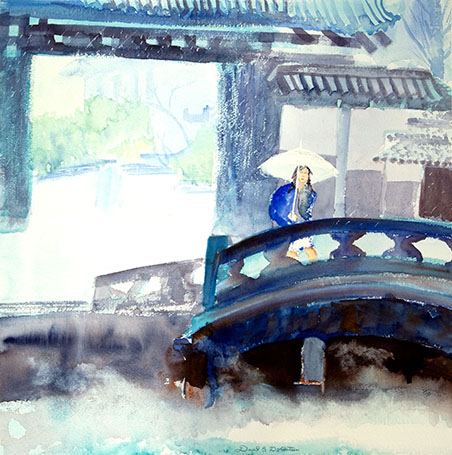
晴耕雨読 seiko udoku : Farm when it's sunny, read when it rains.

晴耕雨読 seiko udoku : Farm when it's sunny, read when it rains.

Sometimes the tides deposit millions of beautiful seashells on the beach and sometimes they wash up only a few broken shards. Have you found that generating ideas is also unpredictable and seems to ebb and flow?

Have you been hungry and wandered around having a difficult time searching for a suitable restaurant and after finding one and eating, you notice on the way home, three more good possibilities. Have you felt indecision when being helped by a pushy salesperson until you say: ”I’m not going to make a decision today.” Then with the pressure turned off, your blood pressure drops, your head clears, and you feel confident to make a purchase.

Sometimes pressure creates necessity, sometimes it creates diamonds, but often it causes anxiety. Are you more creative under pressure with deadlines looming or when relaxed? Not sure what to paint or write? Not sure how to solve a problem? or what to do on a rainy Sunday? When you finally get an idea, the pressure is off, you relax and your mind generates a thunderstorm of new ideas. Too many to use – so catch them in buckets! And write them down for next time. Even if you don’t use them, they can kindle new thoughts.

There is certainly a lot of pressure to develop solutions in Japan today. The kind of pressure most of us would be fortunate to never have to face. To solve the problems – wishing the Japanese buckets of useful ideas!


Creative Inferno

March 3, 2011 By David Goldstein

Spring cleaning

Spring cleaning

The Penguin, the Joker, and the Riddler use their creativity to wreak havoc on Gotham City, while Batman and Robin used their own creative powers to prevent mayhem. Is there a Ying and Yang to creativity?

It’s exciting to throw another log into the fire, but how do you feel about burning something you created? Even failed attempts have some value as lessons learned, or to help spur new ideas? It takes effort to physically clean out the attic and how many poor examples do we keep?

Pablo Picasso said “Every act of creation is first an act of destruction.” In our creative process, do we have to burn to make room for something new? Children rotate the wheels on their Echer Sketch to erase their drawings, just as they topple their towers of blocks, dismantle their jigsaw puzzles, and continuously remold their play-doh.  For us, if the vase flies off the potter’s wheel it’s clearly mud, but most of the time, it’s more difficult to decide when to destroy what we have created. “To build may have to be slow and laborious task of years. To destroy can be the thoughtless act of a single day,” describes Winston Churchill.

After artists becomes famous, every scrap they leave behind gets served as a gourmet meal. Famous or not, who wants their legacy to be a stew of leftovers?

Choosing paintings to frame and hang on our walls is admitting them into our daily consciousness – more difficult is taking them out. Removing them is something I call “deframing” since it’s both defaming and deleting. How do you choose what to frame, what to haul to the attic? Or what to toss on the coals? 

Drawn to Draw: Turn Seeing Into Something More Fascinating

February 24, 2011 By David Goldstein

Drawn to the Sun

Drawn to the Sun

Have you ever watched a seabird appear to change colors from white to aqua as it dives toward the ocean or turn to gold at sunset?  Of course the bird doesn’t change but the reflected light does. One way to appreciate life more fully is by learning “how” to look, since beauty and interesting effects of light are all around.

Most of us think “drawing is hard” and are never taught or motivated enough to move beyond stick figures. Many people don’t know that drawing is not an inborn ability but a skill that anyone can learn in a short time with a little practice. The simple exercises in Drawing on The Right Side of The Brain can give anyone enough skill with a pencil to increase his or her appreciation of the world.

“I hear and I forget. I see and I remember. I do and I understand,” taught the philosopher Xun Zi. 不闻不若闻之,闻之不若见之,见之不若知之,知之不若行之;学至于行之而止矣。

“Do to understand” is where drawing comes in – Drawing is just applied seeing. Try sketching a person’s face to reveal and observe features and expressions in ways you’ve never seen before. Try sketching a landscape to see details of the ground that are hidden from most people and really get to see the subtleties of clouds for the first time. Try to draw the view from your window at different times of day, or in various weather conditions.

Even if your drawing isn’t very good, you will begin to notice things differently.  These activities open the shades to a window that lets you see the world as an artist. With new appreciation for nuances  your seeing will be transformed into something more fascinating.

Survival of the Fittest?

February 16, 2011 By David Goldstein

Yellow Orchid

Not in my backyard

There is an ancient vine growing on a trellis in my backyard. Each spring, some runners reach up for the stream of water that runs along the gutter and each summer, I prune the vines off the roof. It occurred to me that for the sake of order, I was cutting the longest, strongest, and most adaptive stems, and although the plant survives, I’m discouraging the plants full potential and may be missing the best flowers.

Forbes asks: Are people too smart to be creative?
Companies can’t have too many captains and can’t have too many stray vines. Employees are encouraged to keep the status quo and stay aligned with company goals. How do you remain professional without sacrificing creativity? Understanding the mission, adhering to culture, dress, using proper language, grammar, being on time, and keeping to schedules all help your ideas to be accepted without sacrificing your creativity. Bounce ideas off trusted friends before making them public. Look for the formal or informal paths for innovation that allow for review and selection of new ideas worth implementing.

Understanding culture and paths for innovation allows you to climb the trellis and flower without being clipped. How do you create within an organization?

Best of the Best – Your Second Chance

February 3, 2011 By David Goldstein

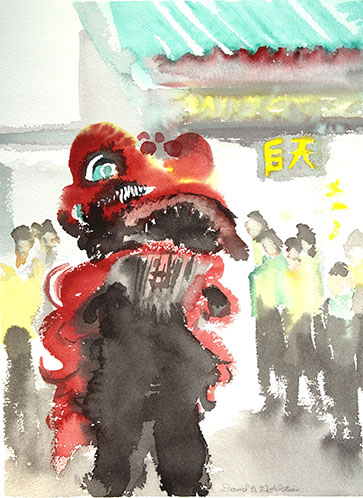
Lion Dance Sheko

Lion Dance: King of the Jungle?

新年快乐! Kung hei fat choi! As China welcomes the year of the rabbit, westerners have a second chance to make a New Year’s resolution and may I suggest something of global proportions.

There is talk of countries using creativity to increase competitiveness through innovation. That’s fine for whole countries but what about us? Individuals are also starting to look around and realize they are not the only ones running the race.  What steps can we take to become personally more competitive?

Although globalization has fans and opponents, it’s nothing new and has been around since before the Phoenicians sailed the Mediterranean or caravans traveled the Silk Road.  Today’s phenomenal growth in the East is partially the result of centrally planned capitalism, for example, China has thrived by looking at their strengths, weaknesses, opportunities, and threats (SWOT) and using this to target industries to put their resources.

Year of the Rabbit (SWOT Analysis)


Strengths


Weaknesses

Cute, Fast, Soft

Small

Multiplies

Poor Language Skills

Four Lucky Feet

Damages Gardens

Excellent Hearing

Owns Easter

Bugs Bunny Franchise

Opportunities

Threats

Silent Spokes-model

Foxes

Entertainment

Wile E. Coyote

Gaming

Competition from:

Pets

Dogs and Cats

Surveillance

Fur Coats

It’s no longer good enough to be the best rabbit on your block or your neighborhood, today; we must be the best in the world. What steps do you need to take to get in the top 1 percent of people within your skill set. We can start by asking what do like to do? What am I especially good at? Where do I add the most value?

List a few things by asking: What do I need to do to get on next year’s top ten list? How do I win the gold medal in cost accounting? What do I need to do to win the Oscar for most efficient software coding, or the daytime Emmy for most positive influence on children, or the people’s choice award for most caring of my patients, or the best supporting customer service rep? Think about what business you are really in – Apple is not in the computer business but information sharing.

Find the best teachers and first-class partners. Find the intersection between your chief skills and your collaborators unique abilities. If we happen to be the best auto mechanics and team up with a great farmer, maybe our competitive advantage comes from improving tractors.

Being the best in no longer about vanity or bragging rights, it’s about survival.  If you take steps to identity and refine your skills now: “You’ll be best of the best. Wherever you go, you will top all the rest,” as Dr. Seuss said.

Your Space and Time

January 27, 2011 By David Goldstein

Not yet sunset.

Not yet sunset.

Where do some of your best photographs come from? When traveling, after we arrive at our destination, everything is new and we capture our first impressions. After staying for a while, our perceptions deepen and we notice things we never would have on first glance.

After spending a week in Krabi, I learned the terrain and how to take advantage of local weather and lighting conditions. Even after a short time, our perception develops.

We prize child prodigies for their gift and honor young artists or writers for seeing things in a new way, but you can almost hear Rod Stewart singing: “I wish that I knew what I know now. When I was younger.” What if we approached subjects armed with a lifetime of experiences and a deep understanding of the world and human nature? Wouldn’t this give us more tools to be creative?

“The normal adult never bothers his head about spacetime problems. Everything that there is to be thought about, in his opinion, has already been done in early childhood. I, on the contrary, developed so slowly that I only began to wonder about space and time when I was already grown up. In consequence, I probed deeper into the problem than an ordinary child would have done” explained Albert Einstein.

Whether or not they started as tots, many creative people made their greatest contributions latter in life using  seasoned approach to produce profound innovations. Every time you look at the same painting or watch the same performance, you see it differently base on your accumulation of experiences. What long settled assumptions will you revisit with the eyes of experience?

  • « Go to Previous Page
  • Page 1
  • Interim pages omitted …
  • Page 6
  • Page 7
  • Page 8
  • Page 9
  • Page 10
  • Go to Next Page »

Primary Sidebar

Creative You ORDER NOW:
amazon
Barnes and Noble

Sign Up For Our Newsletter

Subscribe to the Blog by Email:

Archives

RSS Creativity, Innovation News

  • Art LANDMARK brings innovative partnerships and creative discourse to the center of Central - prestigeonline.com
  • World Creativity and Innovation Day: In the Age of AI, What Makes Art Meaningful? | Newswise - Newswise
  • World Creativity and Innovation Day: In the Age of AI, What Makes Art Meaningful? - Dailyhunt
  • San Francisco Art Fair 2026 Explodes with Global Creativity and Bold Innovation at Fort Mason Center, USA - Travel And Tour World

Copyright © 2026 · Privacy