• Skip to primary navigation
  • Skip to main content
  • Skip to primary sidebar
  • Facebook
  • RSS
  • Twitter
  • YouTube

Courageously Creative

Be more creative in your own way

  • Home
  • FAQ
  • About
  • David’s Artwork
  • Blog
    • Creating
    • Inspirations
    • Innovation
    • Competitiveness
    • Food
    • Risk taking
    • Painting
    • Future
  • Book

Creating

Creating

Barriers can be Ladders

January 20, 2011 By David Goldstein

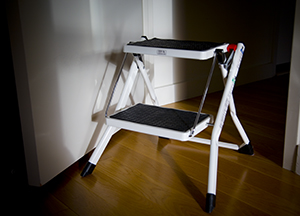
step laddder

Blocking the way or a step up?

You create something that took an hour, a day, or a lifetime and someone comes along and expends five seconds of their time and tells you what you did wrong. It seems much easier (and more fun to some) to stomp on sandcastles than to build one. But sometimes, among the ruins of the castle we can find valuable grains of constructive critics.

Because they are concerned about “What people will say,” many people avoid the risk of creating anything new for fear of criticism, and some are even embarrassed by praise. Sometimes a river is a not an obstacle but a source that sustains life, and sometimes a high wall can be climbed to provide a better view. What people say does not have to be frightening and feedback can enable you to climb.

The first step in sifting out the gold is to qualify the critic. A good question to ask is “did the critic spend an hour, a day, or a lifetime acquiring the knowledge to make their judgments?” If they are knowledgeable in the field, you’re in luck, but sometimes even without a lifetime of knowledge, a critic can be helpful. Even a child can warn that a giant wave is about to crash on your head, but less apt at commenting on your business plan.

Next, can you do anything useful with the advice? Can you use it to improve your project? Or your next project? Like/dislike does not say enough. Is the criticism too late? Is it accurate?

Knowing when to dismiss, delete, and erase from your mind is an important skill. Destructive criticism can be thoughtless, mean and sometimes motivated by other’s agendas and shouldn’t be taken seriously. Much is a matter of opinion where critics unknowingly state their personal values. If their values and objectives happen to coincide with yours, their words could be useful.

Is the criticism given in public or private? Beyond heckles, public criticism is directed to a wider audience and provides information for others: “that was a good movie,” or more qualified, “if you like sci-fi and don’t mind seeing blood,” but not necessary directed toward the producer. Public criticism provides you the chance to respond back to the public, not the critic. “It’s more than sci-fi, it’s also a love story and the violence is limited to one scene.”

To give others useful criticism or advice, speak from your experience and set aside your self-interests. When you receive this kind of criticism, use it to climb the wall for a better view. When there is no feedback, it’s good to assume everyone is deliriously happy.


Destructive Criticism

January 13, 2011 By David Goldstein

Past to the future

Past to the future

It’s amazing how many people are commenting on the controversy sparked by the book about eastern parenting styles called Battle Hymn of the Tiger Mother. Like most people, I have no experience raising teenagers girls of Chinese decent in America and did not read the book – but read an excerpt called “Why Chinese Mothers Are Superior”- and some of the reaction are taking on a life of their own.

The theme of the debate is not whether tigers eat their young but instead can be simplified as: eastern (discipline, academics, and obedience) verse western (self-esteem, independent thinking, play) methods of parenting.

In the 1980s, there was a mystique surrounded the principles of “Japanese management,” and today we start to look toward Chinese values (could happen #3) because of the mystique  surrounding China’s Asian miracle of growth and  lifting their people out of dire povertyis admired.  It’s also amazing to watch a sprouting bamboo  grow an astonishing 24 inches a day in the spring, but this is unsustained and the plant levels off before summer.

There is not a single method for parenting and most reach a healthy balance between being demanding and being permissive, with an aim not to prepare children for our world,  but  for the world they will live in. Criticism can be constructive, but it can also stifle creativity and be destructive.  Use of creativity is needed by young adults to adapt to a world that will change beyond their parent’s imagination. Asia has not changed for centuries but is rapidly changing now. I wonder what kind of upbringing those leading the change in China had. Continuing with traditional parenting prepares children for a world that is confined to  (could happen #1) museums.

Perhaps a controlled upbringing with traditional Chinese values, may have been the best way to prepare a child for an agrarian/manufacturing society where collective rights are valued more than individual rights. Of course academics and discipline matter, but so does developing self-esteem and independent thinking to adapt to an unpredictable future. So do you stake-and-tie your tomatoes or let your chickens run free? What do you think?

Green Potato Chips

December 21, 2010 By David Goldstein

Potato of the Sea

Just watched a Ted talk where the speaker believes our sense of artistic beauty results from a Darwinian adaption effect – and it got me thinking whether this applied to colors and more importantly, what about those green potato chips?

As kids, before knowing better, we used to search for those chips with green edges, prizing them as extra flavorful. Fortunately nobody turned green, but maybe this notion came from our natural appreciation for the color green.

The human eye has a higher sensitivity to green than to any other color. It’s the easiest on the eyes and soothing. Spend too much time in a grey city or a cold climate and then travel to a lush environment and notice how your eyes soak up the saturated green foliage. Green Christmas trees look extra welcoming during a snowy December.

Shades of green are usually up to some good. Not the florescent green of poorly maintained swimming pools but the desirable growth of plants. We have learned to trust green beans, peas, and paper money. Artists often mix their greens and so do chefs, but curiously, mixed green salads are not made of blues and yellows. Green is often used by designers to evoke trust, growth and nature. Pantone, the color matching authority, predicts this year’s new hue will be “honeysuckle,” which is a hot pink. I predict that its green complement is going to be more socially conscious and grab some limelight.

– So what do you think? What associations do you have with the color green?

Fear of Mushrooms

December 15, 2010 By David Goldstein

mushroom and garlic

Double Trouble

Fear of Mushrooms

Who hasn’t been frightened by those menacing alien life forms that emerge from rotten logs.  So many of our confrontations in everyday life take real courage and some of  us have fear of clowns (Coulrophobia),  fear of garlic (Alliumphobia) and the universally dreaded fear of mushrooms (Mycophobia).  In comparison, being Courageously Creative is a bit of an overstatement.

We strive for zero defects, 6 sigma quality control, and just-in-time everything, leaving only a little room for errors. To have courage to create, the room for errors needs more square footage. Common sense says to take a known route to an important meeting, but how about trying a new path on the way back home, unless you have the phobia for returning home  (Nostophobia).

What are you sometimes afraid of when you are being creative? How do overcome these thoughts?

The process of creating requires room for some missteps. When asked about the many attempts to produce his light bulb, Thomas Edison said “I have not failed 700 times. I have not failed once. I have succeeded in proving that those 700 ways will not work. When I have eliminated the ways that will not work, I will find the way that will work.”

We are aware when things are critical; however, to clear an environment to create, try increasing your awareness for times when things don’t matter.  These are the times for experimenting with little downside and there is no courage required. Bravely try new ingredients, but I don’t need to tell you to avoid those wild mushrooms.

– So what do you think?

New Fruit on an Old Tree

November 22, 2010 By David Goldstein

Heirloom

Heirloom

I read the news today oh boy; with much fanfare, the Beatles released the digital versions of their music on iTunes. This is big release for 40 years ago albums. While most music made it to the web a digital lifetime ago, the holdup was related to a long trademark dispute over the ownership of the apple with both the Beatles’ Apple Corp and Apple Computer each wanting a bite. The questions for us to consider are what makes: She Loves you, Yellow Submarine, and Help! endure? And are there  common elements that we can incorporate into what we make?

They were hot in the 60s and their upbeat and enjoyable harmonies, catchy lyrics with timeless messages are some of the reason why the Beatles remain relevant today. Some songs hold up because they remind us of yesterday, but most of these songs hold up because they still remind us of today.

Now that we’re comparing oranges to oranges, what factors have allowed Apple Computers to not only endure but to be getting so much better all the time. People fondly remember the old Macintosh but left unchanged, few would use an antique computer today. While some computer makers concentrated only on increasing processor speed, Apple stayed relevant and ahead of the competition by continuously innovating their products in ways that improve the user’s experiences. Constantly improving their own products, if something works, they don’t just let it be.

– how do you like those apples?

Shortcut to Success in Everything

November 14, 2010 By David Goldstein

Porter carrying supplies up mountain

going up?

It’s a six hour walk up a slippery wet trail – is this the best way to bring supplies to the top of the mountain? I asked why they didn’t use the 30 minute tram, at night when it is not being used by visitors, and my guide answered: it would put the porters out of work.  This provides a strong metaphor about efficiency and best practices.

Have you ever heard of an experienced golfer playing a round with the old clubs they first bought when they were learning the game?  Even while practicing at the driving range, they use their good clubs.

The easiest way to improve your golf game is not with hours of practice, but upgrading your equipment. The easiest way to improve your triathlon time is with the right running shoes, a faster bike, and a better designed swim suit. The right equipment helps to shed time from your finish– and makes you more competitive without extra practice.  What’s the best way to become a better photographer or painter?

A really good photographer or painter can probably produce something decent with the barest of equipment like a pinhole camera or a piece of calk. However, for most of us we are looking for any advantage we can find to improve our results. If you are standing in front of a once in a lifetime view, don’t you want to capture it with the best equipment. Clearly, the easiest way to improve your photos is to use a better lens. If you are spending the effort in learning to paint, the single easiest way to improve is to use better brushes, better paint, and better media. You can see it in any beginning watercolor class, hopefuls struggling with synthetic brushes, student grade paint and unsuitable paper – and with early failures, unfortunately, people give up. Sure upgrading always cost more, but calculate how much your time is worth, and consider how important your ideas are. Of course there is a time and a place for using scrap paper but if you are going to spend the time and energy to create, why hold yourself back. What’s worth doing is worth doing with the right tools. Of course good technique takes years of dedication but starting with inferior equipment makes it almost impossible to succeed. The best way to succeed in anything new is to first value your time and your ideas and start with the right tools and whatever you do, don’t be a porter.

– What do you think?

  • « Go to Previous Page
  • Page 1
  • Interim pages omitted …
  • Page 7
  • Page 8
  • Page 9
  • Page 10
  • Go to Next Page »

Primary Sidebar

Creative You ORDER NOW:
amazon
Barnes and Noble

Sign Up For Our Newsletter

Subscribe to the Blog by Email:

Archives

RSS Creativity, Innovation News

  • Art LANDMARK brings innovative partnerships and creative discourse to the center of Central - prestigeonline.com
  • World Creativity and Innovation Day: In the Age of AI, What Makes Art Meaningful? | Newswise - Newswise
  • World Creativity and Innovation Day: In the Age of AI, What Makes Art Meaningful? - Dailyhunt
  • San Francisco Art Fair 2026 Explodes with Global Creativity and Bold Innovation at Fort Mason Center, USA - Travel And Tour World

Copyright © 2026 · Privacy